
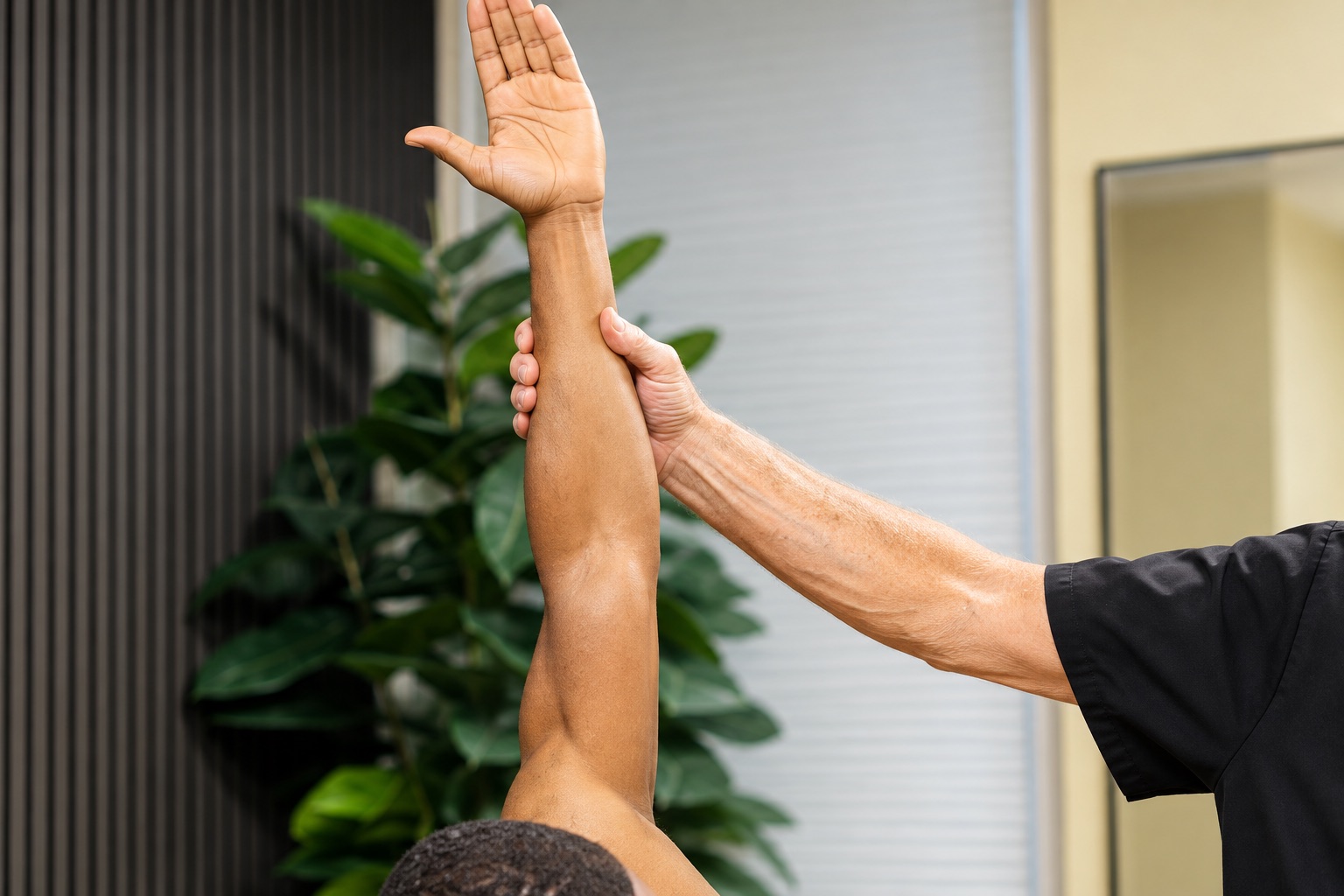
The numbers rarely checked.
Blood pressure, cholesterol and blood sugar get most of the attention. But some of the clearest signals about how we are ageing are simpler: how firmly we grip, how quickly we walk, and how easily we get up from the floor.
In a study of 139,691 adults across 17 countries, every 5 kg lower grip strength was linked to 16% higher risk of death from any cause, and grip predicted mortality better than systolic blood pressure.1 Pooling nine studies of 34,485 adults aged 65 and over, each 0.1 metres per second faster walking pace was linked to about 12% lower risk of death. At 75, predicted ten-year survival ranged from 19% to 87% for men, and from 35% to 91% for women, depending on walking speed.2
These are windows, not targets. Grip and pace reflect the whole system working together: muscle, heart, lungs, nerves and balance.
Strength fades faster than muscle.
Muscle mass declines noticeably from about age 50. Strength falls faster. Around age 75, people lose under 1% of their muscle mass a year but roughly 2.5 to 4% of their strength.3 In one large study of older adults, leg strength fell about three times faster than lean mass.4 Depending on the definition used, 10 to 27% of people over 60 have sarcopenia, a meaningful loss of muscle and function.5 That is why the conversation is about strength and function, not size.
Grip strength predicted mortality better than systolic blood pressure.
Getting up, and standing still.
Two simple tests have drawn a lot of attention. In one, you sit down on the floor and stand back up using as little support as possible. Among 4,282 adults aged 46 to 75 followed for about 12 years, deaths ranged from 3.7% among those with perfect scores to 42.1% among those with the lowest.6 In the other, you stand on one leg for ten seconds. In a group of 1,702 adults aged 51 to 75, one in five could not, and they were more likely to die over the following seven years, 17.5% compared with 4.6%.7
Both findings come from a single clinic group in Brazil, made up mostly of men, so they are best treated as conversation starters with a clinician, not a diagnosis. If you feel unsteady, please do not try them on your own.
Why falls matter so much.
More than one in four Americans aged 65 and over fall each year, and fewer than half tell their doctor.8 Falls caused 41,400 deaths among older adults in 2023, and Massachusetts’ rate, 84.3 per 100,000, was above the national figure of 69.9.9 The age-adjusted fall death rate rose 21% between 2018 and 2024.8 Falls are one of the most direct links between how we move and how independently we live.
What the trials show.
Here the evidence moves from association to experiment. A Cochrane review of randomized trials found that exercise programs reduced the rate of falls in older adults by 23%, with high-certainty evidence. Balance and functional training reduced falls by 24%, and programs combining balance with strength work by about 34%.10 In the LIFE trial, 1,635 sedentary adults aged 70 to 89 who followed a structured program of walking, strength, flexibility and balance work were less likely to lose the ability to walk a quarter mile: 30.1% compared with 35.5%.11 Across 47 studies, adults over 50 who did resistance training gained roughly 25 to 33% in strength.12 Even frail nursing-home residents around age 90 nearly tripled their leg strength in eight weeks of supervised training, although that early study was very small.13
A small, steady dose.
You do not need a punishing routine. Adults who do muscle-strengthening activity have about 10 to 17% lower risk of death, heart disease and cancer, with the largest benefit seen at around 30 to 60 minutes a week.14 US guidelines recommend strength work at least two days a week, yet only 31.5% of American adults meet that goal.15 Two short sessions a week, kept up for years, is a practice almost anyone can begin.
How to read these numbers.
Grip, walking speed and the floor and balance tests are markers. They are linked to survival, but no trial has shown that improving them, on their own, adds years. What trials do show is that strength, balance and mobility can improve at any age, and that falls go down when they do. Flexibility matters for comfort and movement, but its link to longevity is much less certain.