
Start with what you notice.
Maybe you catch yourself holding your jaw. Maybe your shoulders feel busy long after your inbox is closed. These everyday observations are a useful way to begin a conversation about comfort. They are not a diagnosis, and there is no single map of how stress feels.
There is no perfect way to unwind.
Some people settle into silence; others relax when they know exactly what will happen next. Tell your practitioner which you prefer. Comfortable positioning, clear consent and a pressure level chosen with you help make the experience your own.
Give yourself a moment between things.
Before moving from one task to the next, take a short pause. Notice your breathing and where you feel comfortable or tense. You do not have to fix anything in that moment. The act of noticing is a useful starting point.
Bring that conversation into the room.
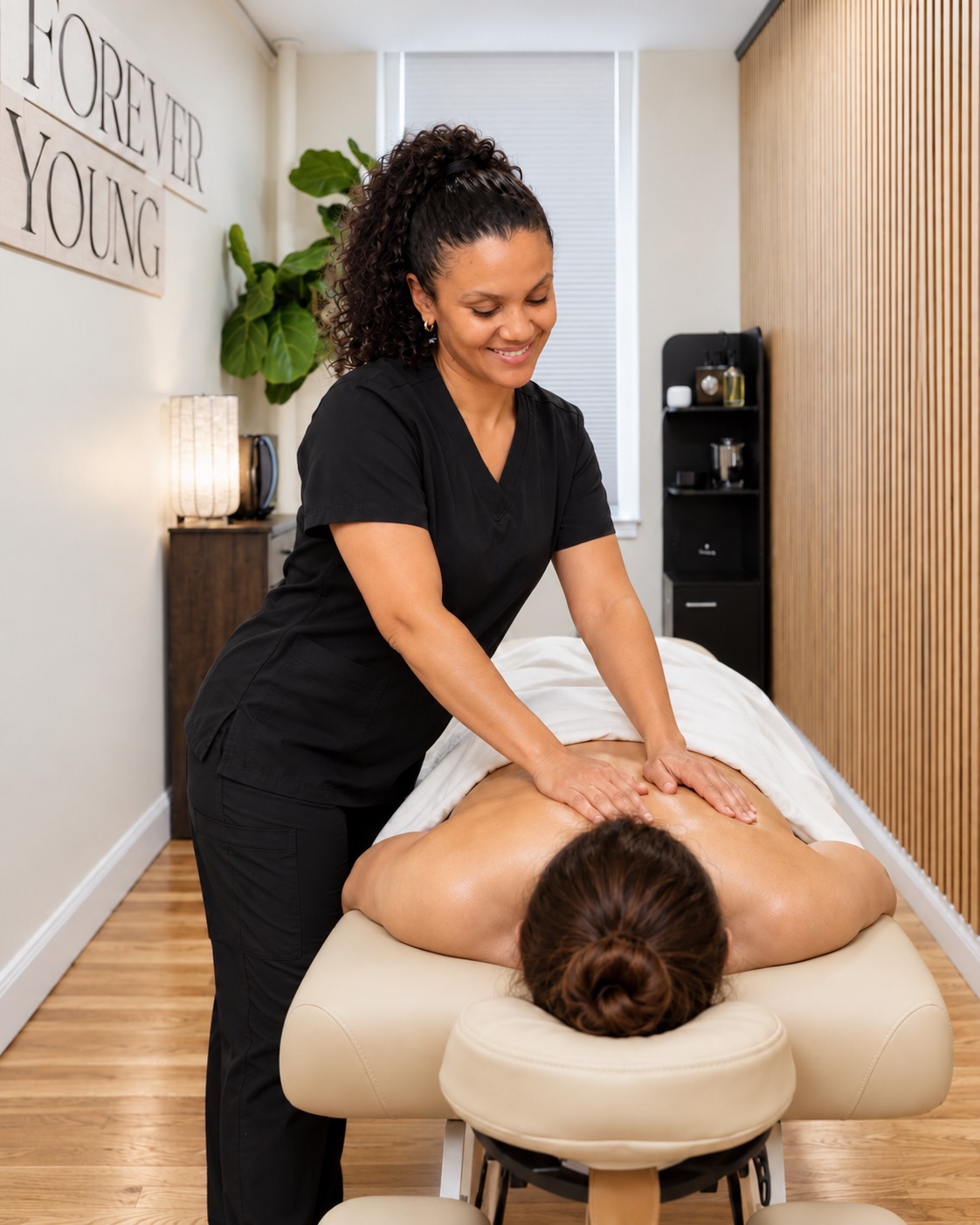
A treatment can offer time and space for rest. It cannot solve every source of stress, but it can become one supportive part of a broader routine. We begin by listening.